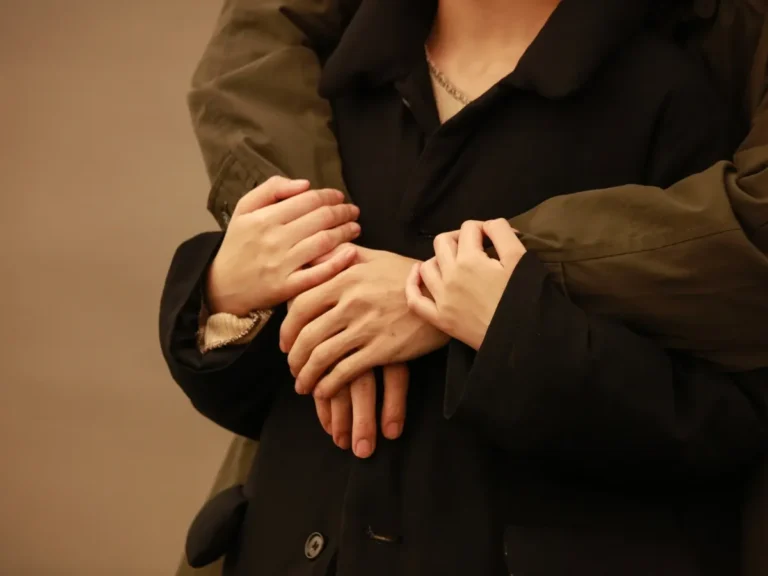
How the past affects love life – Have you ever felt like you’re dating the same person, just in a different body? Or noticed that a tiny comment from your partner can send you into a tailspin of doubt? You’re not alone, and it’s not your fault. Often, what we experience in our love lives today is an echo of yesterday.
Think of your past not as a script you’re forced to follow, but as an old map. Some paths on it are worn smooth by joy, while others are marked by detours and potholes. This guide is about learning to read that map differently, so you can build a new, more fulfilling route toward connection.
6 Gentle Signs Your Past Affects Love Life — and Your Present
These aren’t red flags to judge yourself by, but gentle whispers from your heart, inviting you to pay attention.
1. The Protective Wall: Fear of Vulnerability
What it looks like: You find it hard to say “I need you” or share a deep fear. You hold back, even when you long to let your partner in.
A gentle reframe: Your heart learned to build a wall to protect itself. The goal isn’t to tear it down overnight, but to start placing a small door in it, one you can open when you feel safe.
2. The Door Held Ajar: Commitment Hesitation
What it looks like: You’re in a relationship, but part of you keeps a “way out” in sight. You might hesitate to make future plans or introduce them to your family.
A gentle reframe: This isn’t a character flaw; it’s a self-protection strategy. It’s okay to take small, brave steps toward presence, one day at a time.
3. The Unexpected Echo: Triggered Reactions
What it looks like: Your partner does something small—forgets to text back, uses a certain tone—and you have a reaction that feels much bigger than the moment warrants. Suddenly, you’re flooded with old feelings.
A gentle reframe: Your nervous system is remembering a past hurt. When this happens, get curious, not furious. You can say to your partner, “I’m having a big reaction, and it’s not all about you. Can we pause for a moment?”
4. The Self-Doubt Loop: Seeking Constant Reassurance
What it looks like: You frequently ask, “Do you still love me?” or “Are you mad at me?” You struggle to believe you are inherently worthy of love.
A gentle reframe: This is an old wound whispering you’re not enough. But you are. Practice whispering back: “I am worthy of love, right here, right now.”
5. The Comparison Trap: Measuring Against the Past
What it looks like: You find yourself thinking, “My ex would have done this,” or wishing your current partner were more like someone from your past.
A gentle reframe: Comparison keeps you living in yesterday. Try a simple practice: each day, notice one thing your current partner does that is uniquely them, and appreciate it.
6. The Exhausting Chase: Repeating Old Patterns
What it looks like: You consistently find yourself with partners who are distant, critical, or need “fixing.” It feels like a script you can’t stop reading.
A gentle reframe: Patterns are just learned paths in your brain. By becoming aware of the path, you can choose to step off it and slowly create a new one.
🌱 Beginning Your Healing Journey: A Modern Path Forward
Healing isn’t about “fixing” something broken. It’s about gently gathering the scattered pieces of your heart with compassion. Here’s how to start:
Become a Gentle Observer: Start a simple journal. Not to analyze, but to notice. Write down moments when you felt a strong reaction. What happened right before? What did it remind you of? Just notice, without judgment.
Create a New “Relationship Resume”: List the qualities of your past significant relationships (romantic or otherwise). Next to each, write what you learned you need more of, and what you need less of. This turns painful experiences into valuable data for your future.
Practice the “Pause”: When you feel an old trigger arise, take one conscious breath before reacting. In that pause, you regain your power to choose your response.
Nurture Your Connection to You: The most important relationship you’ll ever have is with yourself. Spend time doing things that make you feel grounded and whole—alone. A walk, a bath, and reading a book. Fill your own cup.
🕊️ your questions, gentle answers real talk
Yes, and it's one of the most common ways the past affects love life. Past hurts—whether from childhood, old relationships, or losses—can shape how we react today. You might notice you're extra sensitive to criticism, need more reassurance, or sometimes withdraw without knowing why. It's not a flaw; it's your heart's way of protecting itself. The first step is simply noticing without judgment. Relationships can become a beautiful place to heal when both partners bring curiosity, not blame.
Start by shifting the question from "stop" to "notice." The way past affects love life isn't always dramatic—it's often subtle. Try this: when an old fear shows up, take a breath and say to yourself, "Ah, there you are, old wound. I see you. You don't have to drive right now." Then, share gently with your partner: "I'm feeling triggered—it's not about you, but can we pause?" Small moments of awareness like this slowly build new patterns. Healing isn't about erasing the past; it's about writing new lines alongside the old ones.
This is one of the most tender ways the past affects love life. When fear arises—fear of rejection, of being hurt again—your nervous system does what it learned to do long ago: protect you by creating distance. It's like an inner voice says, "Leave first before you're left." This isn't rejection of your partner; it's self-protection. The shift happens when you can name the fear out loud. Even whispering to yourself, "I'm scared right now, and that's okay," can soften the need to push away. Over time, you can learn to say to your partner, "I'm scared, and I want to stay close even though I'm scared." That's courage.
Vulnerability after hurt is like dipping your toe in before you swim. Start small. Share something a little personal—not your deepest wound, but a small feeling: "I felt lonely today." See how your partner responds. Do they listen? Do they offer warmth? Each small, safe moment builds trust. Vulnerability isn't about dumping all your pain at once; it's about letting someone see a little more of you, bit by bit, and noticing that the world doesn't end. You get to choose the pace. And remember: being vulnerable means you're brave, not weak.
Absolutely—and many relationships grow stronger because of it. "Baggage" is just another word for life experience. What matters isn't that you have it, but how you carry it together. A relationship can survive when both partners are willing to be curious, not defensive. When one says, "This is my tender spot," and the other listens without trying to fix it. When you both understand that triggers aren't accusations. Healing together can actually deepen intimacy—you learn to hold each other's stories with care. Your past doesn't have to be a problem to solve; it can be a landscape you learn to navigate together, with patience and love.
Breaking a cycle starts with one brave act: pausing. Before you jump into the next relationship, give yourself time to sit with yourself. Ask gently: "What felt familiar in that dynamic? What was I trying to heal?" Often, we repeat patterns because a part of us hopes for a different ending. The real shift happens when you become the person who offers yourself the safety you used to seek from others. Write down the qualities that felt harmful, and next to them, write the opposite—what you long for. Then, slowly, practice believing you deserve that. Breaking the cycle isn't about finding a "better" partner; it's about becoming a safer, clearer home for yourself. From there, you naturally attract relationships that match that new standard.
return to How Your Past Shapes Your Love Life (And How to Create a New Story)
🌿 Summary: Writing a New Love Story
Your past doesn’t have to be your present. When you understand how the past affects your love life, you gain the power to choose differently. The six signs above—fear of vulnerability, commitment hesitation, triggered reactions, self-doubt, comparison, and repeating patterns—are not flaws. They are gentle signals that your history is whispering.
Healing begins when you listen with compassion, not judgment. By noticing how the past affects your love life, you create space for new responses. Small, brave steps—pausing, naming fears, sharing gently—rewrite old scripts.
Remember: the past affects love life, but it does not define your future. You hold the pen now.


.webp)
Pingback: Post-Workout Beer and Kidney Health: Risks & Hydration Tips