
Are you obsessed with slowing down the aging process? Not in a casual “I use moisturizer” way – but in a way that keeps you up at night, avoids candid photos, or makes you feel invisible next to younger women? If you’ve ever felt obsessed with aging anxiety, you are not shallow. You are human. And you are not alone.
Contents
What most people don’t talk about is how aging and self-esteem issues don’t just stay inside your head. They leak into your relationship. They make you pull back from intimacy. They convince you your partner is “settling” for an older version of you.
This post is not about telling you to “just age gracefully.” It’s about understanding why the fear is there – and gently loosening its grip so you can stay connected to the people who love you.
5 Signs Your Anti-Aging Obsession Is Hurting Your Emotional Health
Is the pursuit of "forever young" costing you your peace of mind?
Avoiding Bright Lighting or Close-ups
You find yourself declining social invites or feeling intense anxiety in well-lit rooms because you're worried about visible "imperfections" or aging signs.
Constant Mental Scanning
You spend a significant portion of your day scanning your face in mirrors or checking front-facing cameras, leading to "body dysmorphia" loops and mental fatigue.
Neglecting Essentials for Procedures
Your emotional well-being is tied to the next treatment. If you're sacrificing savings or essential needs for cosmetic upkeep, the obsession has become a burden.
Grieving Your Past Self Intensely
Instead of evolving, you are stuck in a state of mourning for how you looked 10 years ago, preventing you from finding joy in your current stage of life.
Algorithm-Driven Insecurity
Your "feed" is a constant stream of filtered faces, causing you to feel disconnected from reality and perpetually "behind" in an impossible race against time.
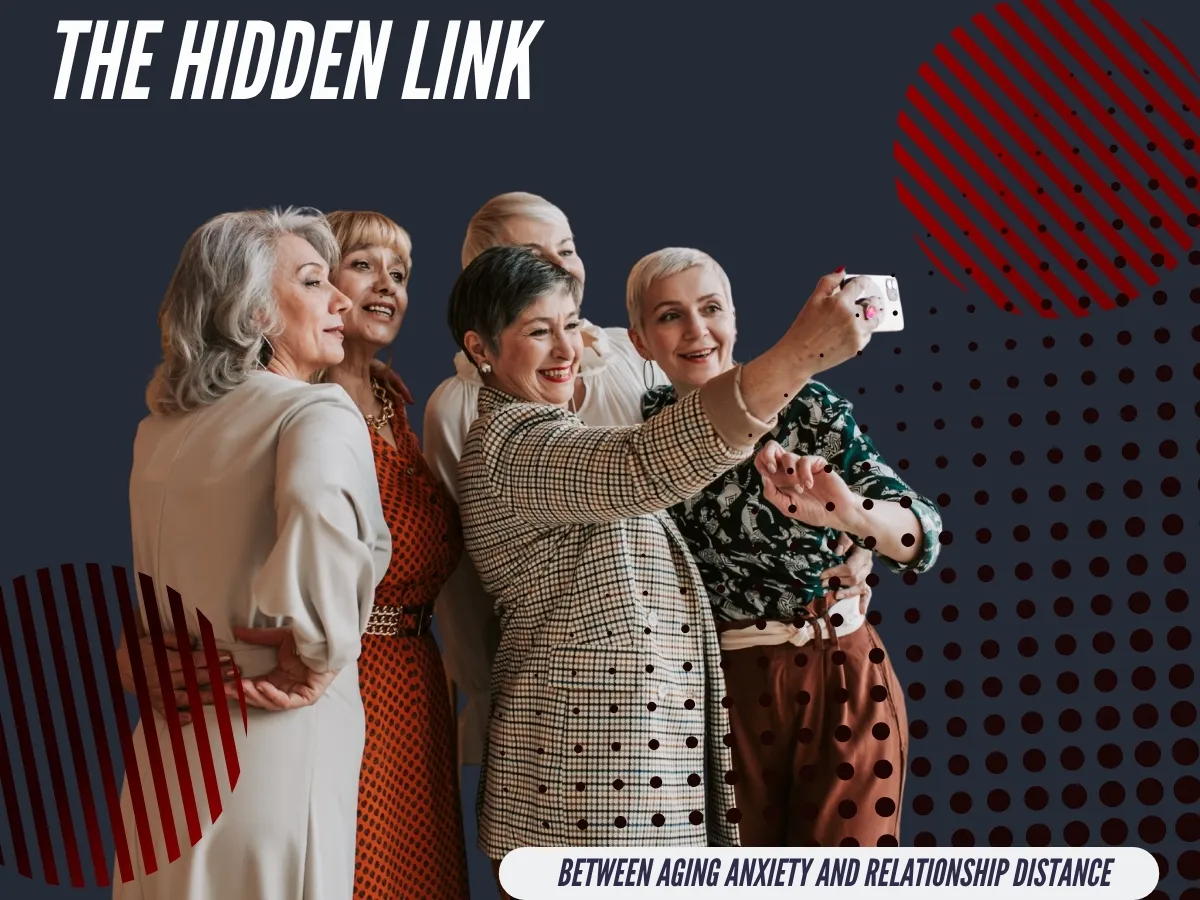
The Hidden Link Between Aging Anxiety and Relationship Distance
When we fear our own reflection, we often stop seeing our partner clearly.
Lights-Off Intimacy
Aging anxiety often leads to physical self-consciousness. By insisting on darkness or avoiding touch to hide "flaws," you inadvertently signal rejection to your partner, creating a physical gap that feels like a lack of interest.
Misinterpreted Compliments
When you struggle with aging anxiety, a partner's genuine praise ("You look beautiful") is often met with eye-rolls or corrections. This "praise-rejection" cycle eventually causes your partner to stop offering affirmation altogether.
The "Replacement" Fear
The silent worry that your partner will eventually leave for someone "younger" creates a state of hyper-vigilance. This jealousy or suspicion, rooted in your own internal struggle, pushes the very person you love away.
Declining Shared Experiences
Avoiding photos, beach trips, or high-energy events because of how you feel about your appearance means your partner loses their favorite companion. The "distance" grows as your world becomes smaller and more controlled.
Navigating the fear of getting older that women often face in a youth-centric culture requires a shift from superficial fixes to deep emotional resilience. While society suggests our value decreases as our skin changes, the reality is that the most vibrant version of yourself lives free from the constant weight of comparison.
Understanding the Root of the Fear
The fear of getting older that women experience is rarely about the passage of time itself; it is about the perceived loss of visibility and worth. We have been conditioned to believe that a smooth forehead is a prerequisite for being seen and loved. To break this cycle, we must first recognize that these anxieties are often “inherited” from the beauty industry, which profits from our insecurities.
Shifting Your Perspective
To stop worrying about wrinkles, start by changing your visual diet. If your social media feed is a curated gallery of filtered faces and high-magnification “anti-aging” routines, your brain will naturally interpret normal aging as a failure.
To truly master how to stop worrying about wrinkles, try these perspective shifts:
- Function Over Form: Focus on what your skin does for you—it protects you, heals you, and allows you to feel the touch of those you love.
- Legacy of Joy: Those lines are the map of your life. They are “smile lines” for a reason; they are the physical evidence of every laugh and every hurdle you have overcome.
Practical Steps for Emotional Freedom
If the fear of getting older women feel is impacting your daily mood, it is time to implement a “mirror fast.” Spend less time analyzing your reflection under harsh lighting and more time engaging in activities that make you feel capable and strong. Whether it is cycling, photography, or creative writing, finding a “flow state” reminds you that your essence isn’t in your pores, but in your passions.
Learning to stop worrying about wrinkles also involves “re-parenting” your inner voice. When you notice a new line, replace the critical thought with a grateful statement. Instead of seeing a flaw, see a milestone.
Reclaiming Your Power
The fear that older women struggle with can be a silent barrier to intimacy and joy. By deciding to stop fighting a war against time that no one can win, you reclaim the energy needed to actually live your life. When you finally learn how to stop worrying about wrinkles, you open up space for a type of beauty that never fades: the beauty of a woman who is entirely, unapologetically comfortable in her own skin. Your value is not a depreciating asset; it is a growing legacy of wisdom, love, and experience.
Women Over 40 Friendships:
The Loneliness Problem Hiding in Plain Sight
Midlife is a common friendship drop-off point
Between career demands, caregiving, marriages, and raising children, many women find their
female friendships over 40 quietly deprioritized through their 30s and 40s — not out of choice, but sheer capacity.
By the time energy frees up, the circle has shrunk, leaving many wondering where their close connections went. This gradual drift isn't a personal failure; it's a structural reality of midlife. Yet the cost is steep: midlife connection wellness directly impacts mental and physical resilience.
Without intentional effort, the loneliness can become chronic, affecting everything from sleep quality to immune function. Recognizing this pattern is the first step toward reclaiming the community that supports longevity for women in this pivotal decade.
Loneliness isn’t just an emotional issue
It has measurable physical health consequences. Social isolation has been linked to worse health outcomes overall — from increased inflammation to higher blood pressure and even cognitive decline. For women navigating hormonal shifts, the stress of loneliness amplifies cortisol, accelerating aging at the cellular level. This isn't about being "weak" or "needy"; it's biology.
Female friendship over 40 acts as a natural buffer, lowering stress markers and promoting emotional regulation. Yet many women dismiss their need for connection as secondary to work or family.
The data tells a different story: midlife connection wellness is as vital as nutrition or exercise. Prioritizing longevity for women means treating social health with the same seriousness as a workout plan — because isolation doesn't just hurt your heart; it shortens your life. Rebuilding community isn't indulgence; it's medicine.
At a Glance: Your Roadmap to Freedom
Slowing Down The Aging Process isn't about chasing an impossible standard of perfection — it's about reclaiming your peace, your relationships, and your joy. This article reveals how the relentless pursuit of youth can silently erode your emotional health and intimacy, while offering a compassionate, science-backed path forward.
We explore the hidden toll of the fear of getting older women often carry — from social withdrawal to the "replacement fear" in relationships — and provide practical strategies to break free. You'll discover that Slowing Down The Aging Process from the inside out means shifting your focus from surface-level fixes to deep emotional resilience, community connection, and self-compassion.
Most importantly, you'll learn how to stop worrying about wrinkles by reframing them as milestones of a life well-lived, not flaws to be erased. This isn't about "aging gracefully" — it's about aging authentically, with confidence and connection.
The Emotional Toll
Slowing Down The Aging Process obsession can lead to social anxiety, identity loss, and financial stress. The fear of getting older women feel is real and valid — but it doesn't have to control you.
Relationship Ripple Effects
Aging anxiety creates distance: lights-off intimacy, rejected compliments, and the fear of being "replaced" by someone younger. Your partner misses you — not your younger face.
How to Stop Worrying About Wrinkles
How to stop worrying about wrinkles starts with changing your visual diet, practicing "mirror fasts," and reframing lines as "smile maps" of your life. Your skin is a storyteller, not a scorecard.
The Real Longevity Hack
Slowing Down The Aging Process holistically means prioritizing midlife connection wellness. Community buffers stress, regulates your nervous system, and adds years to your life — all while making the journey joyful.
Let's talk about it.
Aging is a shared journey, yet we often carry our fears about it in silence.
Share below. You might help someone else feel less alone.
👇Your timeline isn't going anywhere.


