
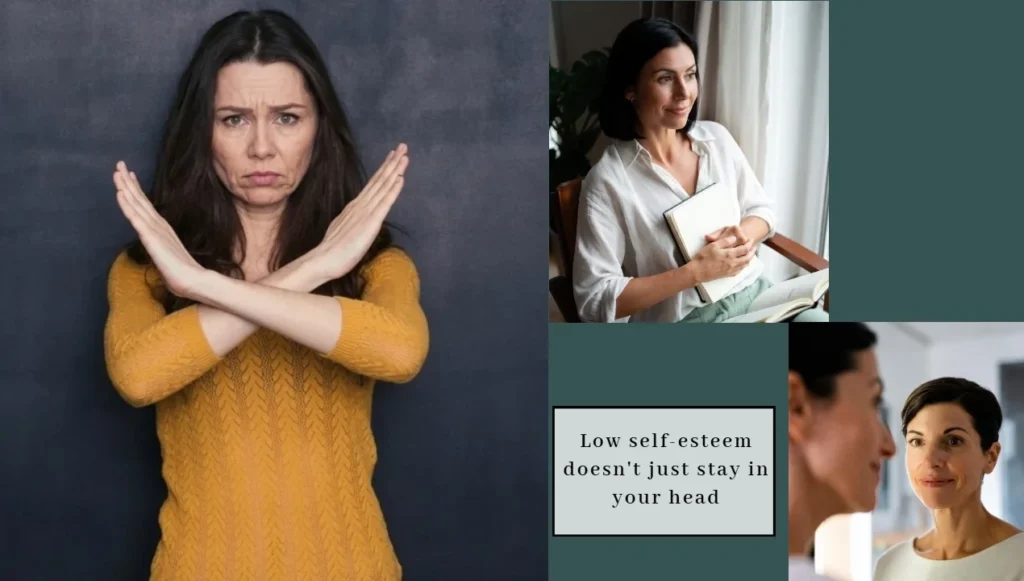
You are not alone. Many women in their 40s and 50s arrive at this point after years of caring for everyone else—partners, children, aging parents—while neglecting their own sense of self. You can actively rebuild self-confidence by unlearning these patterns and replacing them with a more compassionate self-view
The truth is, low self-esteem doesn't always show up loudly. Often, it hides in subtle behaviors:
- 🔍 Constantly seeking reassurance from your partner
- 🛡️ Avoiding vulnerability to protect yourself from potential rejection
- 🚫 Struggling to set healthy boundaries, leading to burnout
- ⚖️ Over-apologizing or feeling jealous without cause
If any of these resonate with you, it's not because you're "broken." It's because you've been carrying outdated beliefs about your worth—likely inherited from childhood, past relationships, or societal pressures. The good news? You can actively rebuild self-confidence by unlearning these patterns and replacing them with a more compassionate self-view.
💡 This guide is for the woman who is tired of seeking reassurance and ready to trust her own voice—so she can show up in her relationship not as a shadow, but as a whole person.
💔 The Invisible Effect: How Low Self-Esteem Affects Your Relationship
Low self-esteem doesn't just stay inside your head. It leaks into your relationship in ways you might not even notice, creating distance and confusion for both you and your partner.
Seeking Constant Reassurance
"Do you still love me?" — While it might feel like seeking comfort, it gradually erodes trust and can make your partner feel like their word isn't enough.
Avoiding Vulnerability
Holding back your true feelings to avoid rejection creates distance and prevents the deep emotional intimacy that strengthens relationships.
Struggling with Boundaries
Saying "yes" when you mean "no" leads to resentment and burnout, making you feel taken for granted, even if your partner doesn't intend it.
Jealousy & Comparison
Comparing yourself to others or feeling threatened by your partner's friendships is often rooted in your own insecurities, not in your partner's actions.
💡 The result? A cycle of insecurity that damages your connection, leaving you feeling unseen and your partner feeling confused about how to support you.
But here's the hope: when you take the time to rebuild self-confidence, it fundamentally transforms the way you interact—creating clear communication, emotional resilience, deep trust, and fearless love.
You've spent decades taking care of everyone else – your partner, your children, your aging parents, your career. But somewhere along the way, you lost sight of yourself. That little voice that questions your worth? It's been getting louder.
For women over 35, rebuilding self-confidence isn't about becoming "perfect." It's about coming home to yourself – so you can show up in your relationship not as a shadow, but as a whole person. This guide is for the woman who is tired of seeking reassurance and ready to trust her own voice.

Signs of Low Self-Esteem in Your Relationship
Low self-esteem doesn’t always show up loudly. Often, it hides in subtle behaviors—like constant over-apologizing, an intense fear of abandonment, or a lingering sense of never feeling “good enough.” Within a relationship, these internal struggles frequently manifest as:
- Seeking constant reassurance from your partner to feel secure.
- Avoiding vulnerability to protect yourself from potential rejection.
- Struggling to set healthy boundaries, often leading to burnout.
- Jealousy or comparison habits that erode trust.
If any of these resonate with you, it is important to realize that you aren’t “broken.” It simply means you are carrying outdated beliefs about your worth—likely inherited from childhood, past relationships, or societal pressures. The good news is that you can actively rebuild self-confidence by unlearning these patterns and replacing them with a more compassionate self-view.
Why Self-Confidence Matters in Love
A partner with healthy self-assurance doesn’t rely on others to validate their value. Instead, they bring security, clarity, and authenticity to the table. This creates a balanced environment where both individuals can thrive as their true selves.
When you take the time to rebuild self-confidence, it fundamentally transforms the way you interact:
- Clear Communication: You speak assertively rather than falling into passive-aggressive traps.
- Emotional Resilience: You stop taking every minor disagreement personally.
- Deep Trust: You learn to trust your partner’s intentions and doubt your own fears less.
- Fearless Love: You give love freely, knowing that your worth isn’t tied to a specific outcome.
In the end, confidence in love isn’t about arrogance—it’s about achieving a state of inner peace that radiates through your entire relationship. Confidence in love isn’t arrogance—it’s inner peace.

Steps to Increase Self-Esteem in Your Relationship
1. Daily Self-Love Habits
Self-love is not selfish—it’s survival. It is the foundation upon which your relationship is built.
- ✨ Affirmations: “I am enough,” “I deserve love.”
- 🪞 Mirror work: Look into your eyes and say something kind.
- 🚶♀️ Movement: Gentle yoga or walking to reconnect with yourself.
2. Rewire Negative Thoughts
Low self-esteem often comes from internalized narratives. Challenge these scripts daily. To rebuild self-confidence, you must first catch the thoughts that steal it.
- 🔁 Catch thoughts like “I’m not good enough” → ask, “Says who?”
- 🌱 Replace with: “I am learning and growing every day.”
3. Build Boundaries with Love
Boundaries are a sign of self-worth, not rejection. You have a right to say “no” when you need space. Every healthy boundary you set helps you rebuild self-confidence in the relationship.
- 🗣️ “I need 10 minutes to decompress after work before I chat.”
- 💬 “I’d prefer we talk about this calmly, not in anger.”
4. Celebrate Progress, Not Perfection
Acknowledge your steps forward—even if they are tiny. Self-growth isn’t linear, but every moment you choose healing, you’re winning. This is how you rebuild self-confidence one small win at a time.
5. Communicate With Your Partner
Be open about your journey. A supportive partner will walk beside you. Try saying: “I’m working on my confidence, and I’d love your support.”
Relationship & Self-Esteem: Q&A
❓ How does low self-esteem affect relationships?
Low self-esteem can create a cycle of insecurity and withdrawal. Fixing it requires practicing self-compassion and opening honest channels of communication with your partner.
❓ Why is confidence important for intimacy?
Confidence allows you to be vulnerable without fear. This security strengthens the bond by reducing jealousy and increasing emotional presence.
❓ Can self-esteem improve communication?
Yes. High self-worth helps you express your needs clearly and listen to your partner without feeling attacked, creating a healthier communicative loop.
❓ What is the role of self-love in partnership?
Self-love acts as a blueprint for how others should treat you. It ensures you don't rely solely on your partner for your entire sense of happiness.
❓ What are signs of low self-esteem in a relationship?
Key signs include excessive people-pleasing, constant testing of a partner's affection, or staying in toxic dynamics due to a fear of being alone.
❓ How long does it take to rebuild self-confidence?
There's no fixed timeline – it varies for everyone. But small, consistent actions (like daily affirmations or boundary-setting) create noticeable shifts within 4-6 weeks. Be patient with yourself. You didn't lose your confidence overnight, and rebuilding it takes time, too.
❓ Can my partner help me rebuild self-confidence?
Yes – but they can't do it for you. A supportive partner can offer reassurance, respect your boundaries, and celebrate your progress. However, the real work happens inside you. Don't outsource your self-worth. Let your partner be your cheerleader, not your source of validation.
📚 Continue your confidence journey
💬 Which behavior resonates most with you?
Share your experience in the comments — you might help another woman feel less alone. 👇
💌 Your journey starts with one small step today.
Choose ONE practice from this post and try it for the next 48 hours. Then come back and tell us:
“What changed – in your mood, your confidence, or your relationship?”
✨ You are not alone on this path. Your story might help another woman.



Pingback: How Your Past Affects Love Life (And How to Create a New Story)
Pingback: Are You Obsessed with Slowing Down The Aging Process?
Pingback: Loneliness Signs in Marriage: 12 Ways to Reconnect With Your Partner