

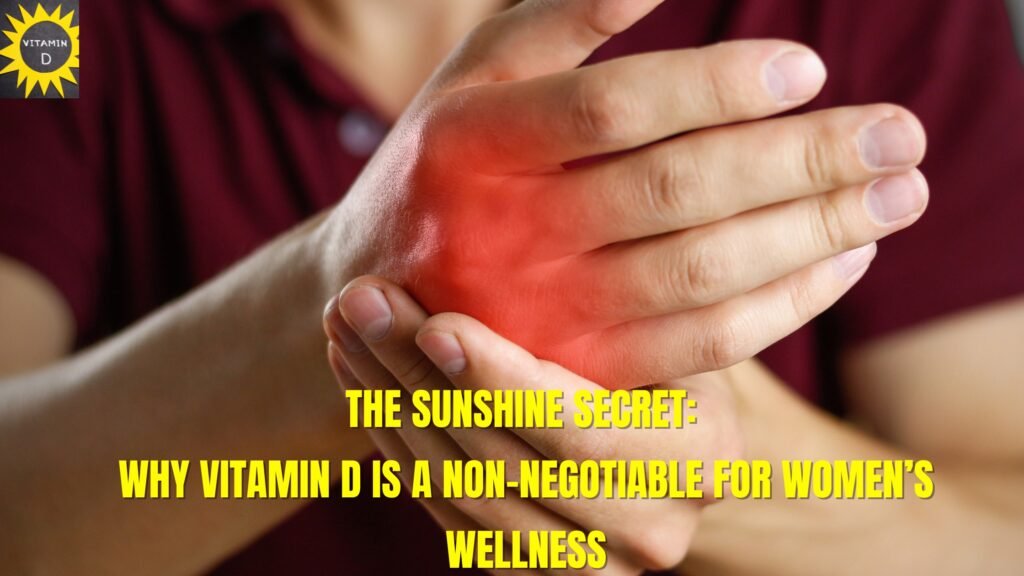
Joint Pain Relief: As we age, our bodies may lose the ability to produce sufficient vitamin D from sunlight, leading to deficiencies that can exacerbate joint issues. Recent studies indicate a strong correlation between vitamin D levels and joint pain relief, suggesting that supplementing this crucial vitamin could be the key to regaining mobility and comfort.
Contents
- 1. Vitamin D: The Secret to Pain-Free Joints & Energy
- 2. 💚 Vitamin D for Joint Pain Relief: What Every Woman Over 35 Should Know
- 3. 🩺 Recognizing the Gap: Is Your Joint Pain Actually a Deficiency?
- 4. 💪 Natural Joint Health: Why Vitamin D Matters for Active Women
- 5. 🚨 Signs Your Vitamin D Might Be Low
- 6. 📊 Recommended Daily Intake for Women
Are you one of the millions struggling with joint pain, constantly searching for ways to alleviate discomfort and pain relief? What if the answer lies in something as simple and natural as vitamin D, a nutrient often overlooked in discussions about joint health?
Vitamin D: The Secret to Pain-Free Joints & Energy
Joint pain is often treated as an inevitable cost of living an active life. Whether it’s the dull ache in your knees after a morning run or the stiffness in your fingers that makes everyday tasks a chore, we are conditioned to reach for ibuprofen or ice packs. But as a fitness and nutrition enthusiast, I’ve learned that we often focus on symptoms while overlooking the foundation.
What if the secret to moving without pain wasn’t a new topical cream, but a simple molecule produced when sunlight hits your skin? Vitamin D—which is actually a pro-hormone rather than a standard vitamin—is the silent architect of our musculoskeletal health. If you are struggling with chronic joint discomfort, you might not be “getting old” or “overtraining.” You might simply be starving for the sunshine vitamin.
💕 How Joint Pain Affects Your Relationship (Without You Realizing)
When you're in constant pain, you don't have the same energy for your partner. You may avoid physical touch, cancel plans, or feel irritable. Your partner may feel rejected – not understanding that your withdrawal is about pain, not them.
Addressing joint pain isn't just self-care. It's relationship care. When you move better, you show up better – for yourself and for the people you love.
🌸 Vitamin D for Women Over 35 – Why Your Needs Have Changed
Perimenopause and menopause accelerate bone density loss. Your body's ability to absorb vitamin D also decreases with age. That joint pain in your knees or hips may not be "just aging" – it may be a correctable deficiency.
If you're over 35, ask your doctor to test your vitamin D levels. Optimal levels for joint health are often higher than general recommendations (50-80 ng/mL). Don't assume you're fine – most women in this age group are not.
💚 Vitamin D for Joint Pain Relief: What Every Woman Over 35 Should Know
To understand why Vitamin D is so critical for joint relief, we have to stop thinking of it as just a "bone builder." While it helps with calcium absorption, its real superpower is calming down inflammation – the hidden culprit behind most joint pain.
How Vitamin D Controls Inflammation
Chronic joint pain is almost always caused by runaway inflammation – like a fire alarm that won't turn off. Your joints swell, ache, and feel hot to the touch. Reducing inflammation naturally starts with addressing vitamin D levels.
💡 Think of vitamin D as the "chief negotiator" of your immune system. It tells your body to stop attacking itself and start healing. When your levels are optimal, inflammation is temporary – not constant.
Protecting Your Bones and Cartilage
Your joints are only as healthy as the bone beneath them. When vitamin D levels drop, your body can't absorb calcium properly. Your bones soften – and even if your cartilage looks fine, the unstable foundation causes pain.
🌸 What this means for you: Vitamin D doesn't just protect your bones – it actively helps your cartilage repair itself. After a long day on your feet or a tough workout, healthy vitamin D levels support recovery.
💚 The bottom line: If you've been dealing with stubborn joint pain, don't just assume it's "normal aging." Ask your doctor to check your vitamin D levels. The solution might be simpler than you think.
🩺 Recognizing the Gap: Is Your Joint Pain Actually a Deficiency?
The tricky thing about vitamin D deficiency is that you can't feel it coming. You don't know your levels are low until the symptoms appear – usually as muscle aches or joint pain. In the fitness world, we blame our shoes or our workout form. But the data suggests a much bigger problem.
The "Silent" Symptoms Most Women Miss
According to nutritional studies, nearly 42% of the US population is vitamin D deficient. If you work indoors or live in a northern climate, that number climbs even higher.
Low vitamin D levels are often mistaken for:
- Fibromyalgia – general muscle and joint tenderness
- Chronic fatigue – feeling exhausted no matter how much you sleep. Learn more about exercise and energy →
- Overtraining – feeling like you can't recover from basic workouts. Signs of overtraining →
💡 Pay attention to "bone pain" – a deep, throbbing ache rather than regular muscle soreness. This is a hallmark sign that your vitamin D levels are critically low. This pain often shows up in your lower back, hips, and legs – your body's weight-bearing joints.
🌿 Stop Joint Pain Naturally: The Power of Vitamin D
If you've decided to address your vitamin D levels, don't just grab the cheapest bottle on the shelf. Vitamin D works best when taken with other nutrients. Taking it alone can sometimes do more harm than good.
The Power Trio: D3 + K2 + Magnesium
💊 Vitamin D3 + Vitamin K2
Think of vitamin D as the "doorman" that lets calcium into your blood. Vitamin K2 is the "usher" that tells calcium where to go. Without K2, calcium can end up in your arteries instead of your bones and joints.
🟢 Magnesium – The "On Switch"
Every enzyme that processes vitamin D needs magnesium. If you're magnesium deficient, the vitamin D you take will remain stored and inactive in your body. Signs of magnesium deficiency →
💚 Pro tip for women over 35: Look for a supplement that combines D3, K2, and magnesium. Your joints – and your future self – will thank you.

🦴 How Vitamin D Keeps Your Bones Strong as You Age
Why does this matter so much for the fitness community? Because joint pain is the #1 reason people stop exercising. When we lose our ability to move without pain, we lose muscle mass, metabolic health, and mental well-being.
By optimizing Vitamin D, you aren’t just relieving pain; you are extending your athletic lifespan. You are ensuring that your skeletal system is dense enough to handle progressive overload and that your immune system is “smart” enough to repair damage without causing excessive swelling.
💪 Natural Joint Health: Why Vitamin D Matters for Active Women
Bone Health
Essential for strong bones. Especially important for women after menopause who face higher risk of fractures.
Immune System
Supports your body's natural defenses and helps maintain overall cellular health.
Muscle Function
Vital for maintaining strength, mobility, and balance as you age.
Disease Prevention
Research suggests links to lower risks of breast cancer, heart disease, and type 2 diabetes.
Pregnancy Health
Supports healthy outcomes for both mother and baby during pregnancy.
🚨 Signs Your Vitamin D Might Be Low
Constant Fatigue
Extreme exhaustion that doesn't get better with rest – often the first sign.
Bone & Joint Pain
Dull, throbbing pain in your hips, knees, or lower back.
Muscle Aches
General weakness and cramping that doesn't have an obvious cause.
Mood Changes
Low levels are linked to seasonal depression and increased anxiety.
Hair Thinning
Disruption in the hair growth cycle, leading to noticeable shedding.
Frequent Colds
Weakened immunity makes you more likely to catch respiratory infections.
☀️ How to Get More Vitamin D
Sunlight
Your skin produces vitamin D naturally from UV rays. A few minutes of midday sun several times a week can help.
Dietary Sources
Fatty fish (salmon, tuna, mackerel), egg yolks, and UV-exposed mushrooms are natural sources.
Fortified Foods
Many milk, yogurt, cereal, and plant-based alternatives have added vitamin D.
⚠️ Can You Get Too Much Vitamin D?
Yes – more isn't always better. Too much vitamin D can cause problems. Here's what to watch for:
Nausea & Vomiting
High calcium levels in the blood can cause stomach upset.
Frequent Urination & Thirst
An unquenchable thirst and running to the bathroom often.
Muscle Weakness
Sudden difficulty moving or a drop in physical strength.
Mental Fog
Difficulty thinking clearly, memory lapses, or confusion.
Kidney Stones
Calcium deposits forming in the urinary tract can be painful.
Irregular Heartbeat
Excessive calcium can affect your heart's rhythm.
💡 Pro tip: Stick to recommended amounts (600-800 IU daily for most adults). Always talk to your doctor before starting high-dose supplements.
📊 Recommended Daily Intake for Women
Ages 1–70
600 IU daily
(15 mcg)
Over 70
800 IU daily
(20 mcg)
Pregnancy & Breastfeeding
600 IU daily
(15 mcg)
💚 Remember: These are general guidelines. Your needs may vary based on your health, location, and sun exposure. Ask your doctor about testing your levels.
Summary: Reclaim Your Life from Joint Pain
Natural joint pain relief doesn’t have to come from a pharmacy aisle. For many women, the answer lies in a simple vitamin – one that your body produces when sunlight hits your skin. Understanding the connection between vitamin D and joint health could be the first step toward moving without pain.
🌸 What you need to remember:
- Natural joint pain relief is possible by addressing underlying vitamin D levels
- Joint pain relief for women often requires a different approach than for men – hormones and bone density matter
- Knowing vitamin D deficiency symptoms women experience (fatigue, bone pain, muscle weakness) can help you catch the problem early
If you’ve been struggling with unexplained aches, don’t just assume it’s “normal aging.” Talk to your doctor, get your levels tested, and consider supporting your body with the right nutrients – including D3, K2, and magnesium.
💚 Remember: You don’t have to live with chronic pain. Small changes – more sunlight, better nutrition, the right supplements – can make a big difference.
🦵 May your joints feel better, your energy return, and your life be pain-free.
💬 Have you noticed joint pain improving with vitamin D?
Share your experience – your story could help another woman find relief.
✨ Natural relief is possible. You don't have to live with chronic pain.