

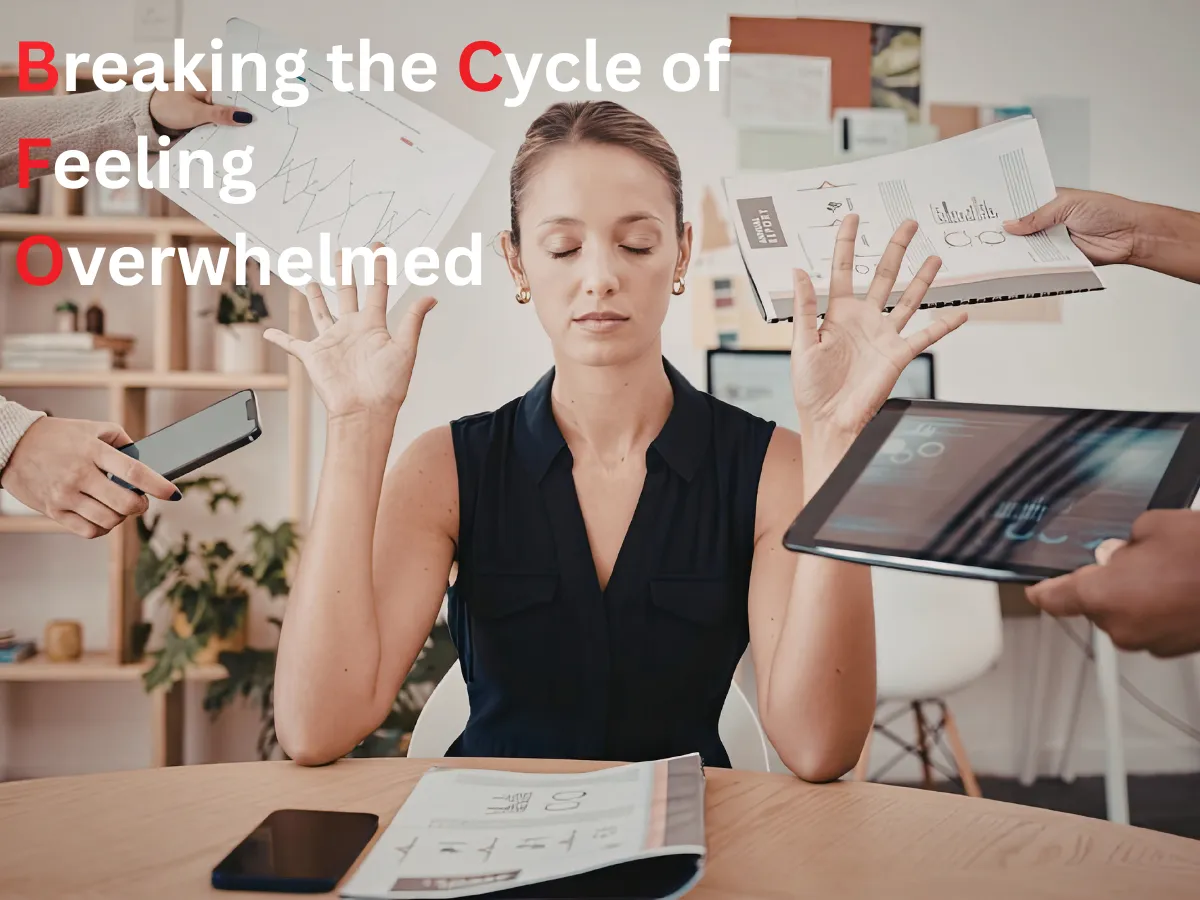
Have you ever noticed that the more you try to “catch up,” the further behind you feel? This is the Overwhelm Loop. It occurs when your brain stays in a state of high alert, treating your daily to-do list like a survival threat. To stop this, you must focus on breaking the cycle of feeling overwhelmed by addressing the biological “alarm” in your nervous system.
Contents
Understanding the “Overwhelm Loop”: Why It Keeps Happening
When you are stuck in this loop, your brain’s prefrontal cortex (the part responsible for logic) shuts down, and the amygdala (the fear center) takes over. This makes even small tasks feel like mountains. Implementing specific daily habits for chronic overwhelm is the only way to signal to your brain that you are safe, allowing you to regain focus.
The Mechanics of the Loop:
- The Freeze Response: You have so much to do that you end up doing nothing, which creates more guilt.
- The “Busy” Trap: You perform low-priority tasks to feel productive while the big stressors continue to grow.
- The Energy Crash: You push through exhaustion, leading to a burnout that makes the next day even harder.
Breaking the cycle of feeling overwhelmed requires moving away from “emergency mode” and into “intentional mode.” Without a structured approach, your mind will naturally default to panic. By curating daily habits for chronic overwhelm—such as morning brain dumps and scheduled “digital fasts”—you create a buffer between your triggers and your reactions.
- Trigger: An influx of data, tasks, or emotional demands.
- Reaction: The nervous system enters "Fight or Flight," causing brain fog.
- Result: Decision fatigue sets in, leading to avoidance and increased future stress.
4 Signs Your Nervous System is Stuck in Overdrive
When your nervous system is stuck in overdrive, it operates in a constant “fight-or-flight” state. Here are four key signs:
- Hyper-Vigilance: You are constantly scanning for problems, unable to relax even in safe environments.
- Exaggerated Startle Response: Small noises or unexpected movements trigger intense physical jolts or irritability.
- Physical Tension: Persistent jaw clenching, tight shoulders, or digestive issues that don’t resolve with rest.
- Emotional Reactivity: You feel “wired but tired,” swinging between intense anxiety and total exhaustion.
Recognizing these signals is the first step toward reclaiming your calm.
The Difference Between Stress and Chronic Overwhelm
Stress and chronic overwhelm are often used interchangeably, but they represent different physiological states. Stress is usually tied to a specific external trigger—like a deadline or a difficult conversation. Once the task is completed, the stress dissipates, and your body returns to balance.
In contrast, chronic overwhelm is a pervasive state where the nervous system loses its ability to reset. It feels like an endless “flooding” of the mind, regardless of the actual workload. While stress is about having too much to do, chronic overwhelm is about having too much to be. It is a deeper emotional saturation that requires a fundamental shift in the nervous system, rather than just a better schedule.
This is for informational purposes only. For medical advice or diagnosis, consult a professional.
How to Break the Cycle: Actionable Steps for Today
To break the cycle of overwhelm, you must shift from “management” to “interruption.” When the nervous system is flooded, adding more tasks—even self-care tasks—can feel like a burden. Instead, use these three immediate anchors to halt the loop’s momentum today.
1. The “Rule of Three” for Task Management
When everything feels urgent, nothing is. Overwhelm thrives on the illusion that all tasks carry equal weight.
- The Action: Choose exactly three things that must happen today to consider the day a success.
- The Boundary: Once those three are identified, give yourself full permission to ignore everything else. This reduces the “noise” in your brain and provides a clear finish line.
2. Somatic Grounding: The 5-4-3-2-1 Technique
Overwhelm lives in the future (worry) or the past (regret). Grounding pulls your nervous system back into the present moment, where safety exists.
The Action: Acknowledge:
- 5 things you can see.
- 4 things you can touch.
- 3 things you can hear.
- 2 things you can smell.
- 1 thing you can taste.
The Result: This simple sensory check-in forces your brain to exit the “thought loop” and re-engage with your physical environment.
3. The “Low-Stakes” Decision
Overwhelm often leads to decision fatigue, where choosing what to eat for lunch feels as heavy as a career move.
- The Action: Pick one tiny, inconsequential area of your day and automate it or decide instantly.
- The Goal: By making a fast, “low-stakes” decision (like picking your clothes for tomorrow now), you prove to your brain that you are still in control, breaking the “paralysis” phase of the cycle.

The Emotional Well-being Strategy
Acknowledge the Feeling
Overwhelm is a natural response. Recognizing and labeling these emotions, rather than suppressing them, is the first proactive step toward effective management.
Stress Management
Utilize deep breathing, muscle relaxation, and visualization to calm the body. Regular physical activity like walking or yoga helps lower cortisol levels significantly.
Mindfulness & Meditation
Focusing on the present moment without judgment helps quiet the mind, improves concentration, and enhances your overall resilience to daily stressors.
Prioritize & Set Goals
Break larger tasks into manageable chunks. Focus on what truly matters by setting realistic, achievable goals to reduce the weight on your shoulders.
Consistent Self-Care
Make time for activities that bring joy—reading, nature, or hobbies. Consistent self-care nourishes your body and spirit, maintaining long-term emotional well-being.
Time Management
Avoid procrastination by setting personal deadlines and using to-do lists. Allocating specific time blocks for tasks keeps productivity high and anxiety low.
Healthy Boundaries
Protect your energy by saying "no" to commitments that don't align with your values. Assertive communication prevents burnout and preserves work-life balance.
Positive Reframing
Practice gratitude and challenge negative thought patterns. Cultivating an optimistic mindset reminds you of your power to overcome setbacks.
Support Systems
Reach out to friends, family, or professionals. A therapist can offer valuable strategies to navigate difficult emotions when stress feels unmanageable.
.webp)
Conclusion: Choosing a New Path
Overcoming the sensation of being buried under endless demands isn’t about working harder; it is about breaking the cycle of feeling overwhelmed through radical self-compassion and intentionality. When you stop treating your life like an emergency, you allow your nervous system the space it needs to reset.
By committing to small, manageable daily habits for chronic overwhelm, you transition from being a passenger in your own life to the driver. This journey is not linear, and there will be days when the “loop” tries to pull you back in. However, once you have the tools for breaking the cycle of feeling overwhelmed, you can catch yourself sooner and return to a state of calm. Remember, your productivity does not define your worth—your peace of mind does. Consistently applying these daily habits for chronic overwhelm will eventually turn “calm” from a rare visitor into your permanent home.
Your First Small Step Today
The road to clarity begins with one intentional choice. We want to help you start breaking the cycle of feeling overwhelmed right now. Don't try to change everything overnight—instead, pick just one of the daily habits for chronic overwhelm and try it for just 24 hours.
Your insight might be exactly what someone else needs to hear to begin breaking their own cycle.
Drop your choice in the comments below!



Pingback: Know The Hidden Link Between Emotional Health, Food and Mood
Pingback: 7 Toxic Thoughts We Tell Ourselves (but Need to Stop)
Pingback: Sadness and Anxiety: A Guide to Understanding and Managing Overwhelming Emotions
Pingback: How Your Past Affects Love Life (And How to Create a New Story)