
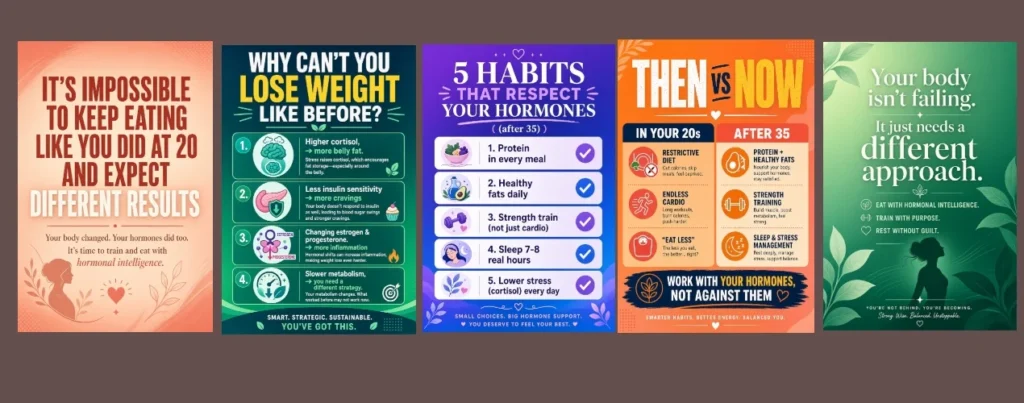
Why You Can’t Eat Like You Did at 20: Hormone Balancing & Fat Loss Over 35
If you’re a woman over 35 doing "everything right"—eating clean, cutting calories, grinding through cardio—yet the scale refuses to budge, hear this: Your body isn’t broken. Your hormonal environment has shifted, and the rules of your twenties simply no longer apply.
Contents
- 1. Why You Can’t Eat Like You Did at 20: Hormone Balancing & Fat Loss Over 35
Many women reach a frustrating plateau where traditional fat-loss tactics deliver the opposite effect: stubborn belly fat, deeper fatigue, and intense sugar cravings. Continuing to apply an aggressive "eat less, move more" strategy without factoring in hormonal shifts often accelerates muscle loss and increases stress hormones. It is time to update your playbook for sustainable weight loss for women over 35.
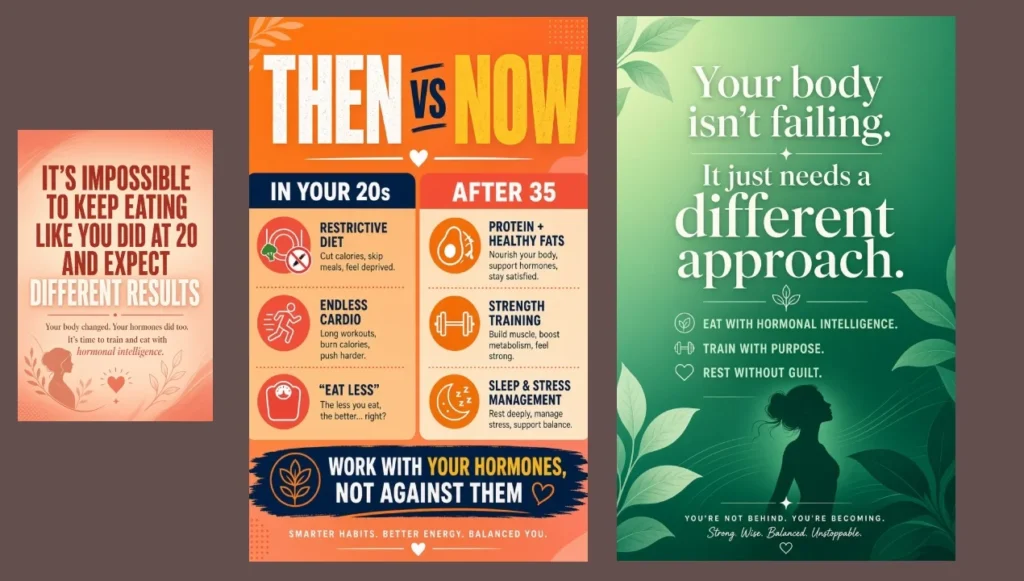
Then vs. Now: Shift Your Strategy
In your twenties, high estrogen levels, optimal insulin sensitivity, and quick stress recovery made your metabolism forgiving. After 35, your physiology requires a smarter, more supportive structure:
| Tactics in Your 20s (Outdated) | Hormone-Smart Strategy Over 35 |
|---|---|
| Strict calorie restriction & skipping meals | Prioritizing protein & healthy fats for hormonal stability |
| Endless cardio as the main fat-loss tool | Progressive strength training to protect muscle mass |
| Pushing through fatigue with coffee | Intentional sleep hygiene & daily cortisol recovery |
| Ignoring chronic stress loads | Managing stress to prevent abdominal fat storage |
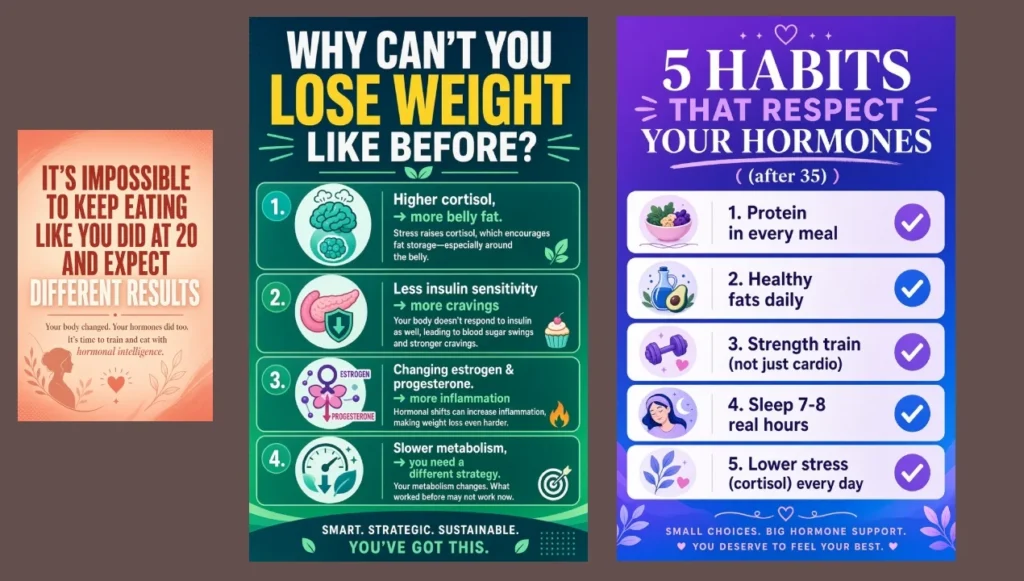
Why Your Body Changes: The 4 Hormonal Shifts
1. Higher Cortisol → Elevated Belly Fat
Stress triggers cortisol, which directs the body to store fat around the abdomen. If you are chronically under-slept, balancing heavy life demands, and pushing intense cardio sessions, cortisol stays elevated. In this survival state, your body prioritizes energy storage over fat burning.
2. Declining Insulin Sensitivity → Increased Cravings
As insulin sensitivity naturally dips after 35, cells become less efficient at processing blood glucose. This leads to blood sugar spikes and crashes, driving intense carb cravings, midday energy slumps, and easier storage of body fat even without high calorie intake.
3. Fluctuating Estrogen & Progesterone → Low-Grade Inflammation
In perimenopause, erratic shifts in estrogen and progesterone can trigger systemic inflammation. This often manifests as joint discomfort, persistent bloating, sluggishness, and increased fat retention around the hips and midsection.
4. Sarcopenia (Muscle Loss) → Slower Metabolism
Without intentional strength work, women lose 3–8% of muscle mass per decade after 30. Less muscle lowers your basal metabolic rate, meaning the same calorie intake that once maintained your weight can now cause gradual gain.
5 Hormone-Friendly Habits for Fat Loss After 35
Protein supports muscle synthesis, stabilizes blood sugar, and boosts satiety hormones. Aim for 25–35 grams of high-quality protein (eggs, Greek yogurt, poultry, fish, tofu, or lean meats) at every main meal to eliminate afternoon cravings.
Dietary fats provide the essential cholesterol building blocks needed to manufacture estrogen and progesterone. Incorporate avocados, extra virgin olive oil, nuts, seeds, and wild salmon into your diet daily.
Resistance training is the most powerful tool to improve insulin sensitivity and boost resting metabolic rate. Aim for 2 to 4 focused strength sessions per week rather than prolonged cardio workouts.
Sleep is when your body clears cortisol, balances hunger hormones (ghrelin and leptin), and restores muscle tissue. Chronic sleep deprivation directly promotes abdominal fat storage.
Incorporate daily non-exercise recovery practices: 10-minute walks outdoors, breathwork, setting work boundaries, or screen-free evenings. Reducing cumulative stress is critical for metabolic health after 35.
Cooperate With Your Physiology, Don't Fight It
Struggling with weight loss after 35 is not a sign of failure—it is simply a signal to stop using 20-something strategies for a 35+ body. By prioritizing protein, lifting weights, managing stress, and resting intentionally, you align with your body’s biology to build lasting energy, strength, and vitality.
Summary Hormone balancing & fat loss:
For women over 35, traditional restriction often stops working because achieving hormone balancing & fat loss requires working with your shifting biology rather than against it. Lowering cortisol, supporting estrogen and progesterone production, and maintaining insulin sensitivity are essential to uncovering how to lose belly fat after 35 female bodies naturally hold onto.By focusing on daily protein, progressive strength training, healthy fats, and stress management, you create the optimal environment for hormone balancing & fat loss. Shifting away from chronic calorie cutting and applying these targeted habits provides the clearest roadmap for how to lose belly fat after 35 female health conscious individuals need to see real, lasting results.


